Thursday, April 03, 2008

Author Interview, Daniel Clay


I am thrilled and honoured to have Daniel Clay here as my very first author interview. He patiently went through all 20 questions I put to him and wrote some really good responses. Here they are, unabridged.


I hope you enjoy them.

Question 1
Your “Why I Write” article on Fifth Estate is what first alerted me to your forthcoming book, Broken being published. Following on from that article, do you think writers are born, as opposed to someone deciding to write to become the next massive best seller, and thereby trying to learn the craft, following some of the formulae you see set out in “How To” books?

I’m not sure either scenario is true for the vast majority of writers. For me, I started out with the urge to write rather than the ability to write and I’d say that’s the most important thing – it might have taken me years to get to a publishable standard, but if there’s someone out there of my age who was born with more natural talent than I was but no urge to do anything about it, then which of us has had the luckier break?

If you’ve always had the urge to write but don’t feel you’re making progress, I’d say there are different ways you can try to improve rather than throwing in the towel because you don’t feel blessed with enough natural talent. How-to books are good and I do think it’s important to read a selection of them, but, for me, trying to follow them took a lot of the fun out of writing and there was a stage when I almost gave up because I was sick of trying to stick to a bunch of rules that I didn’t necessarily agree with. I firmly believe the best people to learn from are the writers you love to read yourself. They’re obviously doing something that works for you as a reader, so if you can understand how they’re doing it and try to import their values into your own writing, the chances are you’ll improve much more than you would from any how-to book. Everything else is patience, time, writing stuff that excites you, luck, and not giving up.


Question 2
What made you write Broken?

The basic premise was to take the family structures in Harper Lee’s To Kill A Mockingbird and see how they’d interact with each other today. I’d read Mockingbird the previous summer and kept thinking, what sort of novel would Harper Lee write if she was sitting down to write it today, after living the life that I’ve lived? What would Scout Finch be like with a modern ‘one-parent’ up-bringing? What would the welfare state do to Boo Radley? How would those characters impact on each other today? This is why so many of the names in Broken echo the character names in To Kill A Mockingbird, because I wanted this starting point to be clear.

Question 3
Looking back at your completed novel, is there anything in there you regret having to leave out or realising that you had to put it in, in the final draft?

There were plenty of passages that I felt were very powerful pieces of writing that never made the published novel, but I don’t have any regrets about taking them out. It’s good to have fun when you’re writing the first draft and allow yourself to go off in different directions, but once that stage is over it’s important to think about what’s best for the overall novel and the characters in it – not to mention the reader. In terms of regretting anything I left in, no. When I read Broken through for final sign off, I was really pleased with the way it had turned out and felt it was the best I could do.

Question 4
Will any of your friends and family recognise shades of themselves in your work?

I don’t think so, no, and they’re making a mistake if they do. There’s bits of me in it – Mr Jeffries’ frustrations over his career when he gives his ‘life’ speech were very much my frustrations at the time – but my friends and family escaped Broken unscathed.

Question 5
How has your life changed since Broken has been published?

I’ve been able to give up my day job for a spell to concentrate on writing, which is fantastic, as that’s always been a dream. The most positive change, though, is that I always used to worry I was being selfish or unreasonable by putting so much time into trying to improve my writing, and that pressure’s been lifted now. I also used to worry that people thought I was wasting my time and being a bit of a dreamer, but I don’t feel anyone can accuse me of that anymore.

Question 6
I found, whilst reading Broken that you have a very keen satirical eye for current affairs. Did you have to hone it, specifically for the novel or is it something you find comes naturally to you?

I think it’s something that comes naturally to me as a person – I don’t have a lot of faith in human nature or authority and my sense of humour is dry and can be sarcastic – but it’s not something that comes naturally to me as a writer and I had to work on getting that aspect of my attitude into Broken.

Question 7a
Do you write at home, and if so – is it in ordered chaos or pristine contemplation?

When I wrote Broken I did so in my study at home (it’s a box-room with a PC in it really!) and on a lap-top in my lunch hour in the staff canteen at work (a bit awkward when you’re writing strip-poker scenes between drunken fifteen year olds, not to mention some of the other stuff that goes on in Broken and other novels I’ve written). Our house is quite neat most of the time and I tend to listen to music through head-phones whenever I write, so I’m not sure if that classes as ordered chaos or pristine contemplation. Maybe a little of both.

Question 7b
Do you have specific times during the day which you write?

At the time I wrote Broken, I’d try to write as much as I could before work (sometimes an hour; quite often just ten or so minutes), every lunch-hour at work, ten till midnight every Monday, Tuesday and Wednesday, and as much as I could at the weekends. I’m not sure how often I managed to stick to this, but these were the targets I set myself. I do think, though, if you’re working for a living, trying to write in your spare time, and trying to lead some sort of normal day to day life, that you shouldn’t beat yourself up too much if you don’t always stick to your writing targets. Any time spent writing is great. Any time not spent writing is experience for when you manage to get back to it.

At the moment, I take myself off to a library each week day to write, but also try to write in my spare time as well. When I have to go back to a day job, I’ll try to get back to the above routine.


Question 8
Writing is a lonely job. Did you find that you had to make a concerted effort to break away from it to be social with friends and family, fearing that you might turn into someone on the fringes, only ever observing?

I’ve never really had that fear because I’ve always had a tendency to feel a bit like that anyway, but when I was trying to write and hold down a day-job, it was easy to see time spent with family and friends as time that could have been better spent writing. In those terms, there were times when I had to be realistic about how much time it was fair to disappear for. Luckily, my wife likes a lot of her own space, and is often glad to see the back of me.

Question 9
How much of your story did you know when you sat down to write Broken?

Very little, and it took at least three months of messing around before it all started to fall into place. As an example of how little I knew, I’m pretty sure I didn’t know Skunk was narrating the story from a hospital bed until about a month before I finished the first draft. I always knew she was in trouble, but not what the trouble was or where she was telling her story from.

Question 10
How did you celebrate the good news when the firm offer for publishing your book came through?

I was at work when I found out. Very few people there knew I wrote and no one knew I had a novel under submission, so I went outside and telephoned my wife to tell her what had happened, then, at lunch time, went to a pub on my own and had a pint of Stella to celebrate. Sad, aren’t I?

Question 11
In your article, Coping With Rejection, you make several valid points about writers having to be stubborn and to believe in their work, to keep polishing it and not to give up. However, do you think you would have reached a threshold at some stage, had the rejections for Broken continued?

I hope not, no, but I think there would have been times when I didn’t write as constantly as I had been doing for the eight or so years before Broken sold.

I’m quite confident I would have carried on because, by the time I wrote Broken, I was already at a stage where I was only willing to write what interested me rather than if I thought I could sell it – if it felt right to start working on it, I didn’t then think, what genre is it, what’s the market, who are my readers, what publishing house is it aimed at? That was a very liberating decision to come to, and I probably wouldn’t have started to write Broken if I’d sat down and tried to tick all these boxes with my original idea. If you’re going to give over a lot of your spare time to writing, you have to make sure you’re doing stuff that excites you and makes it feel worth your while rather than trying to follow some sort of ‘getting published’ template.


Question 12

Have you started on anything else since handing in Broken?

I have, yes.

Question 13
How much do you plot when deciding to write or do you let the story take you where it will?

I do plot a lot, but mostly in terms of who the characters are and a few separate events that will happen to them throughout the novel. I like to have an end in mind, but rarely stick to it once I get started – if it feels right to move away from whatever I was originally thinking, then I do, but I’m not scared to go back to it either if things start to go a bit wrong. I also tend to make a lot of longhand notes before and during the time I spend writing, and then hardly ever bother to look at them. I think they just help me to think.

Question 14
In all the books that you’ve read, either fiction or non-fiction, what are your favourites and which do you wish you had written?

There are so many. In terms of imagination, Clive Barker’s Weaveworld stands out. In terms of wishing I’d written it, probably Ken Kesey’s One Flew Over The Cuckoo’s Nest, although I haven’t read that in quite a few years now, so might change my mind if I did. Jonathan Trigell’s Boy A is probably the most recent novel I’ve read where I’ve really wished it was my name on the cover; Lionel Shriver’s We Need To Talk About Kevin stands out in that respect too.

Question 15
Do you have a favourite genre?

No. I tend to like novels that rise above their genre or don’t have one in the first place. The Exorcist, to me, is much more than a horror novel. I think Jaws is much more than a beast v man novel as well. I wouldn’t like to categorise One Flew Over The Cuckoo’s Nest or Boy A or We Need To Talk About Kevin. They’re just novels I loved to read. If someone said, you must read this novel, I wouldn’t think ‘no way, it’s sci-fi or romance, etc.’ and turn my nose up at it.

Question 16
If someone came into a bookshop where you worked, how would you sell Broken to them?

I probably wouldn’t be able to. I’m terrible at promoting myself. If someone had a gun to my head, though, while I was doing my shift behind the counter (my agent or editor, for instance) I’d probably say something like ‘this is a really gripping contemporary read, full of characters you’re going to recognise and emphasise with, and available in 3 for 2’.

Question 17
Do you ever get writers block and how do you overcome it?

Not really writer’s block, but I get periods where I know I’m not writing as well as I should be writing; the expressions that matter aren’t there and I don’t believe in the scenes or characters I’m creating. I just tend to keep on going as sometimes it’s not quite as bad as I think and, even if it is, at some stage I tend to write myself out of it and then just go back and redraft. I also get periods where I don’t want to do any new writing, I just want to polish what I’ve already done to the point where I’m no longer making improvements, I’m just changing words here and there that don’t really make any difference. If this gets really ridiculous, I split writing sessions so half has to be on new stuff, and half can then be on polishing.

Question 18
I think Broken can be made into an excellent mini-series. You only have to look at the good quality shows currently doing the rounds, Skins, Ashes to Ashes, to name a few. If you had to cast the main characters in Broken, do you have any actors that immediately come to mind?

I’m afraid I don’t, no, but Broken has recently been optioned by BBC Films, so maybe one day we’ll get to see a casting director’s take on who should play who.

Question 19
Did you attend any writing courses and what is your opinion about them?

I did a Writers’ News correspondence course in my mid twenties and I’ve attended the Winchester Writers’ Conference on and off over the past eleven years, as well as several one off events at different times. I’ve got very mixed feelings about them. They can be great if you get someone who understands what you’re about as a writer (I’ve had some really good advice and encouragement) but they can be an absolute nightmare if you get someone who rips your stuff to shreds on the basis of a few pages and a synopsis. This happened to me with Broken while I was still working on the very first draft and it’s a hard thing to tell yourself you’re right and they’re wrong when they’re the ones making a living out of writing and you’ve got nothing behind you. Like any form of criticism, it’s always important to understand what you’re being told and I’d never say dismiss negative feedback out of hand, but think very carefully before you act on it. So long as you understand this, I’d say conferences and courses are good, and you should attend them if you get the opportunity to.

Question 20
Finally, after all your articles on Fifth Estate, do you have words of wisdom for other yet-to-be published authors out there?

Show your completed novels to as many people as you can, especially those who read for pleasure. I was very shy about my writing and hardly ever showed anyone who didn’t write or work in publishing what I’d produced. Now, with hindsight, I think doing so would have speeded up my development, as it would have made me think about things from a reader’s perspective much more than I used to.

Also, don’t think you’re a failure or wasting your time if you haven’t had anything published yet or aren’t making a living from your writing. I felt like that about myself and I regret that now. Some of the greatest novels in the world have been written by people who had never been published the day they sat down to write them. Who’s to say you won’t be next? And, even if you’re not, every time you sit down to write you’re going to be learning and improving as a writer, so how can it ever be wasted time?


His debut novel Broken has been published by HarperPress in March and is currently available in all good book stores.


Tuesday, March 25, 2008

Scott Lynch, Red seas under red skies


Words escape me, to be honest.
This is even better than Lies of Locke Lamora. The boys lie, cheat, steal, pirate and swashbuckle their way into so much trouble, you can only feel sorry for them. And then you notice the amount of fun they are having by being so wild and reckless and you wish that Pirates of the Carib was half as good as this, even if you proclaimed yourself as the Number 1 Jack Sparrow Fan.
I cannot WAIT for the next installment, to be honest.
Bring it.

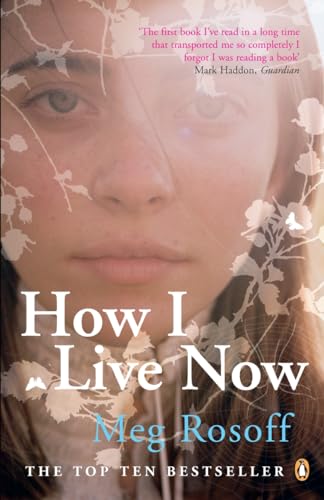
How I live now, Meg Rosoff


There is nothing more satisfying than finding an unusual and beautiful book on the recommendation of a random person.
This was the case with Meg Rosoff's book, How I live now. I've seen it at Waterstones in the past and thought nothing much of it, until a friend at work recommended it to me. And I was totally blown away by it.
The style is unique, written in a very freeflowing style without the use of dialogue indicators. It's almost a stream of consciousness writing, to be honest. It took me maybe 2 chapters to get used to it, but I was immediately lured into this gloriously beautiful and random world the main protagnonist Daisy created...there are rumours of war, there always is...she comes to the UK to visit her cousins who are very eccentric and unique and slowly but surely they accept her...then war breaks out and things go pearshaped.
There are some truly beautiful pieces in this book, reflecting Daisy's keen eye and her sense of amazement in the world. She initially tries the NY "have seen it all" look but it does not wash in the countryside.
The cousins are separated as the war starts, we never find out who invades England, we just know that they are the enemy. We follow Daisy and Piper on their journey to try and get back to their farm, after being split from the rest of the family. It is heartbreaking and quite scary, but it shows how tough people are in adverse situations.
I seriously enjoyed the book and read it in two afternoons, unable to wait to see how it finished.
I would recommend this as one of those rare books that cross over in genres successfully - children's fiction, into adult fiction, without losing anything in translation.

Thursday, February 28, 2008

Broken, by Daniel Clay


I really enjoyed Broken. I laughed and I cried. Daniel Clay’s created a roller coaster of a ride in this book. I’ve personally always thought my next-door neighbours are a bit, well, intense. It seems like Daniel took them, relocated them, roughed them up even more, gave them horns and sent them out into the world. They make a starring role as the Oswalds in Broken. They are a family from hell. Nothing can touch them, it seems. The kids run riot, bullying, stealing and intimidating, throwing reckless parties and getting stoned. The dad does all of these things, including beating people up, like teachers and neighbours.


On the other hand we have a very shy young man, Rick Buckley who becomes the Broken in the title. Because of an accusation from one of the Oswald girls, he snaps in a very tragic and heartbreaking way. He becomes a recluse. And this is only the start of his and everyone else’s nightmare.

Watching all of this, is Skunk Cunningham. Who is a very endearing and genuine heroine. The book opens with her in a coma…and slowly but surely she teases the story out and you can’t help but fall straight into it.

Broken is written in an intelligent and hyper-real way. No matter where you live, who you are, or what you do, you will find reflections of your own life in here. The style is very easy to read. Once you realise exactly what is happening, you feel helpless and have to sit it through, watching the inevitable onrushing train and desperately hoping that you can bail out.

Daniel Clay has a tremendous talent. He strings the reader along expertly and introduces the characters, their motivations and aspirations clearly. It becomes a bit of a fly on the wall documentary on everyday people’s lives. It looks at relationships, the society we live in and makes interesting comments and observations about everyday mundane happenings that never occur to you to think about twice.

I really recommend this book. If, for instance, you liked The Lovely Bones, you will love this. I hate comparing books to one another, to be honest, but because this is a book that deserves to be read widely, you will have to somehow encourage the existing audience to do so. It is much funnier than The Lovely Bones, it is very British and very much what is happening today.

I will definitely not just recommend this book to friends, but will probably also be the one buying it for them for presents.

Good luck Daniel – you genuinely deserve the recognition your hard work has garnered you.

Sunday, January 27, 2008

White Night - Jim Butcher


In brief: (courtesy of Amazon.co.uk)
A series of apparent suicides rings alarm bells with the police. And before he knows it Harry Dresden, professional wizard, is hired to investigate. At the first crime scene he finds an unmistakable magical taint - and a message specially designed for him, referencing the killing of witches. Harry is desperate to hunt down his tormentor and halt the killings, but instead finds evidence implicating his half-brother, Thomas. To Harry, this just doesn't add up, so he must add clearing his brother's name to his expanding list. Something that didn't make the list is subtlety, and Harry's search attracts the attention of the White Court of vampires ...Soon, whichever way he turns, he faces a power struggle that will render him outnumbered, outclassed and dangerously susceptible to temptation. And if he screws up, his friends will die.
The not so brief:
This has to be one of the best Dresden books which Jim Butcher's written. I have to admit that I read it too quickly, purely because I wanted to see what happened. I did not skip anything, too much happens in it, to do that to it, but it just rolled at a cracking pace and I 150% enjoyed reading it. I cannot wait for the next one to come out.
You can tell that a lot of work went into this one - it is very well written, funny, rocks with action and there are amazing one-liners - enough to make Joss Whedon watch his crown as the King of One Liners.
Harry gets into a lot of trouble - nothing new there - and he has a strong cast to back him up. Jim's writing is strong, confident and the internal dialogue which he has Harry muse about is relevant, hilarious, interesting. In all, a really good book, worthy a re-read.

Wednesday, December 26, 2007

The Lies of Locke Lamora - Scott Lynch


I've had Lies on my bookshelf for a while now and in a way, I regret not reading it sooner...but having said that, I'm pleased that I've taken my time to get to it.


It is luscious. Full bloodied. High adventure and thrilling.


One criticism though: dammit, write the other books!


The main character Locke Lamora is a well thought out, independent, and intriguing character. He leads the band of Gentleman Bastards. He also happens to be the Thorn of Camorr. Against his will. But this is not the end of his problems. It is only just beginning.


It is so very easy to see how this set of books can be turned into a very lucrative movie. Several, in fact. But I sincerely hope it doesn't, because no one but Johnny Depp will be able to play Locke and we definitely don't want things to hark back to Capt. Jack Sparrow. Locke is vastly different. And much more fun.


It smacks of daring-do and excitement, of crime-lords and vile deaths, poisons, bondsmages. In fact, I think Mr. Lynch sat at his desk with an entire set of characters drawn up from several RPG games and threw them into the mix to make the story work. And ye gods, it does. Hearteningly so.


If you've read either Robin Hobb, Fiona McIntosh, James R R Martin's books, the Bastard sequence of books will be for you. It's new, it's exciting, it's being written by a very talented chap who deserves all the medals and honours that can be heaped on him for rejuvenating a slightly flagging genre.


Go. Go buy it.

Wednesday, November 21, 2007

Belshazzar's Daughter, Barbara Nadel

I have had this one sitting on my bookshelf for a little while now, since before the trip to Greece back in August. I regret not reading it before now. It is incredibly well written, tightly plotted with memorable characters and a gripping storyline. And the fact that it is set in Turkey, Istanbul and deals very interestingly with the murder of an elderly Jewish man in a less than savoury area of the city, is but one part that gripped me. Overtures of Nazi-ism ran amock through the book, it focussed on destructive relationships, obsession, love and strong willed people doing the wrong thing for the right reasons.

I surprised myself by enjoying this book so much that I didn't want it to end. I dragged it out, re-reading certain descriptions over again, and googling the places mentioned.

I think this will translate fantastically well into a Indie movie as it is a close, personal and very private sort of book with characters that enchant and repulse in equal measure. It also revels in the fact that you should not pigeon hole people, especially slightly drunk bad tempered policemen. Barbara Nadel did a sterling job with this one - I've just stuck her details into Amazon and am genuinely pleased that there a few more novels of hers to read.

Definitely...ten out of ten!

Sunday, November 04, 2007

Blood is the new Black,Valerie Stivers


If you've read The Devil Wear's Prada, or seen the movie adaptation thereof, or watched Mean Girls and loved Buffy, then you'll like this. It is a good, fun and a quick read. For something that was brainstormed in a few hours and then given to Valerie Stivers to write, it is a fun romp through the unusual world of the world of magazine-life, through the eyes of the main character.
She very soon discovers that the people who run the magazine are all vampires and that they can move around during the day, can cope with sunlight, and that they all ove "product."
Yes, you can only be a vampire if you are tall, skinny, pretty and enjoy shopping. This is the people they choose to "turn." The more you shop, the Tasty-er you are. It is a ridiculous spin on the old vampire stories. I am pleased I did not pay full-price for this, as it certainly isn't worth the £6.99 it is retailing for.
Think carefully, when buying this. It is cashing in on the new chick/horror/supernatural lit genre that is happening...and it is a sad imitation of all of these individual genres.
3 out of 5.

Monday, October 22, 2007

Random Decision


I have decided, besides all the studying that I will be doing next year to complete the first part of my Diploma in Surveying Practice, I am about to set a challenge to myself. One that will have FG groan in his soul and the people at Waterstones and Amazon giggle and clap with glee.

I will be listing down every single book I am reading - be they reviewed on here or not - for the year 2008. I would like to see exactly how many books I go through. Even if they are books for studying.

It will be an interesting exercise and one I am keen on fulfilling.


I will be using this site to keep a track of them - and have in fact already set up an extra bit of space for it.

Gulp.


Saturday, October 06, 2007

Sacrifice by SJ Bolton


I have to say one thing about this novel: it is gripping! Thanks to a lovely young lady at Transworld I got a bookproof to read through in advance of the book being published. And I am really pleased that I had. I will be buying copies to give to friends to read, it is that compelling and utterly un-put-downable.

Set in the mysterious and far-away Shetlands the story follows the discovery of a body in the peat by a young woman - what follows is a detective, forensic thriller along with some anthropological bits thrown in, an ancient legend to boot - it has all the makings of a best seller and I cannot wait for the book to go "live" to see it on the best sellers lists.

The author's worked hard on this novel, by all accounts, and it shows. It's polished and an accomplished thriller. Definitely five out or five for this one.

Sunday, September 30, 2007

Dead Men's Boots, Mike Carey

What an incredibly ripping yarn. I became a fan because of the Constantine novels...and then picked up the first Felix Castor novel which was fun, scary and introduced a very real and fun character, full of problems and past failures.
I think what makes this works is the fact that it is set in London, the slightly unsavoury side of things, which makes it real - there's a court case with a dodgy judge, there are immortal spirits who have found a way to live forever...it is involved and intense and in the end, quite a bit of a bite in the tale - getit?
Synopsis
Before he died, Castor's fellow exorcist John Gittings made several calls asking for help and if Castor had answered them, John might still be alive. So when a smooth-talking lawyer comes out of nowhere to claim the remains, Castor owes it to John's unhappy ghost and even more unhappy widow to help out. If only life were that simple. A brutal murder in King's Cross bears all the hallmarks of an American serial killer supposedly forty years dead, and it takes more good sense than Castor possesses not to get involved. He's also fighting a legal battle over the body - if not the soul - of his possessed friend, Rafi, and can't shake the feeling that his three problems are related. With the help of the succubus Juliet, paranoid zombie data-fence Nicky Heath and a little judicious digging, Castor just might have a chance of fitting the pieces together before someone drops him down a lift shaft or rips his throat out. Or not...

Friday, July 27, 2007

The Religion by Tm Willocks


I started on this about 2 days ago and am utterly enchanted. It is so well written by someone who clearly loves what he is doing. His research shows in suble ways and I have yet to find an information dump so blatant and boring it wants to make you pluck out his hair.
The main character, Mattias, reminds me strongly of the character created by Louis L'Amour in The Walking Drum. In fact, if there was to be a follow up novel for the Walking Drum, I would suggest Tim Willocks should apply. He writes with an easy and engaging grace. His characters are palpable and real and funny and genuinely surprising.
I really look forward to reading the rest of the book and will report back!

Monday, July 23, 2007

Wanna be a writer?


I have got a large bookshelf stocked with writing reference books, from Stephen King to Terry Brooks to various Writers Digest books, Orson Scott Card and Lisa Tuttle. On various subjects - middles, ends, characters, dialogue, structure - and so on.

But none of them are as funny and rib-crackingly hilarious as Wanna be a writer by Jane Wenham Jones. I picked this up a few weeks ago and am planning to buy it for all and sundry - even those friends of mine who do not write.

If you've ever wondered, as a non-writer / non-potential writer, what it takes to sit down behind a laptop or desktop computer, or if there are pitfalls to being a writer (such as writers butt), or why some potential or existing writers tend to be able to sit for ages, staring off into the distance with a vapid expressions, then this is the book to solve all those mysteries and then some.

Packed from cover to cover with clever advice, intelligent and pertinent comments for modern writers, this is a true treasure of a book. It inspired me to pack myself off to my local Waterstones' cafe to sit and write, which I did. Several short stories were born in due course.
Ms. Wenham Jones uses her skill as talented writer and humourist to bring reality to the profession sometimes seen as monotonous and dreary. It lifts the lid on our insecurities, our paranoia and what we would do to get our books published. But it is done with such style and good humour I am sure it would find a cross-over market for those who like reading books, i.e. everyone then!
I have several writerly friends who will be getting a copy for this as "random present" very shortly.

Saturday, July 14, 2007

City of Bones, Cassandra Clare


If you are a fan of Holly Black, Lilith Saintcrow, Jim Butcher and other urban / modern fantasy writers, this will be right up your street. The book is a YA novel and circles around a young girl, Clarissa Fray, who sees things that really should not be there. A teenager gets killed infront of her, in a nightclub and disappears/evaporates...and it isn't long before she disappears down the rabbit hole herself. Her mother disappears, she discovers some nasty things about her family and that there is a an age old war being fought between forces of light and dark, which humans are unaware of.
The novel started off, a bit self-consciously, with Clary struggling to find her voice - does that make sense? - but once the author manages to get a hold of the protagonist, it is a roller-coaster ride of rollicking goodness. Complete over the top dialogue, if you liked Buffy or Angel, you would love the one-liners in this, set pieces that sizzle and make you gasp in sheer delight. I think, it would film fantastically well. I can imagine Guilermo del Toro directing it though, as he did an excellent job with Hellboy and Pan's Labyrinth. The supporting cast to Clary's adventure is a mixed bunch - the beautiful and deadly Isabella, her brother Alec who is the one to watch for spectacular revelations and then there is Jace who is partly modelled on every bad boy you can dream of. Beautiful, deadly and oh so very funny and complete aware of how over the top and seemingly self-centered he is.
I really am looking forward to the second novel, due out next year only. Tsk. But I can wait.

The Thirteenth Apostle, MIchel Benoit


I recently bought a copy of this book, purely on the name and the cover. I skimmed the back and definitely didn't read the author's bio at the back of the page. I am a sucker for books like this and am a huge Umberto Eco fan, so when I saw it was recommended as being in the similar vein as The Name of the Rose, I was sold.


I only today started reading it. I have great hopes for it. You can tell, from the word "go" that it is on a vastly different level than Dan Brown's work, Sam Bourne or Mr. Sussman's. This is written by a scholar, for people who enjoy reading, words, thought and mystery.


This from the publisher's website, an interview with Mr. Benoit:


Michel Benoît on The Thirteenth Apostle


In 1975, having returned safe and sound from Rome, where I had spent four and a half years in a pontifical university close to the Vatican, I began to study the sources of Christianity, only to uncover a scoop: Jesus was a Jew! I had never heard this before.


If Jesus was a Jew, he lived, behaved, taught, breathed like a Jew. If Jesus was a Jew, his teachings are those of a Jew, and not of a “Christian”.


He was transformed into a God shortly after his death: where? when? how? by whom? and above all, for what reasons?


That is when I discovered the origins of a 2,000-year-old deception, the creation of an immense edifice of power (the Church) in the name of a man who had become God despite himself.
And I discovered that I was not the only one: for fifty years scholar upon scholar – Jewish, Protestant, Catholic – had been working towards the same goal – the rediscovery of the historical Jesus. They were highlevel academics, operating in complex disciplines: history, exegesis, archeology, linguistics, epigraphy…


Along the way I discovered in relation to Jesus a thirteenth apostle, who appears sporadically in religious texts. This man really existed, he presents himself in the Gospel according to St John as a close friend of Jesus.


He plays a crucial role in the final weeks of the life of the man from Galilea. However his existence and even his name have been erased from all the texts and from western memory.
Why? Did he know something that must be hidden at all costs? Was he that dangerous?


I have been on his trail, as a scholar interested in historical truth. He seems to have been linked to the Essenians, and his legacy has begotten a movement which has persisted throughout the centuries up to our times: gnosticism.


This had all the elements of a thriller. As opposed to Dan Brown, mine is solidly based on historical research. I have drawn on this material to imagine what would have gone happened if this man had left behind an epistle in which he revealed the truth about Jesus.


This letter does not exist, but could have existed. Fiction completes history, as long as it respects probability: sè non è vero, è ben trovato – if it is not true, it is well imagined.


The only thing that was left to do was to let the bombshell detonate. It places the Vatican in a perilous position, as its power derives from the foundation myths of Christianity. It is also worrying for the established Jewish and Muslim faiths, for whom Jesus is a troublesome figure. As for my description of the behaviour inside the Vatican (plots, lies, manipulations, sex and money), it is actually an understatement of the reality that I have encountered.


For Roman Catholics, this book is dangerous because it tells what must be silenced. For Muslims it is unacceptable because it describes (briefly) the true birth of the Koran.


For those who are seeking clarity after centuries of lies, it is enlightening. For those who enjoy juicy stories, it is refreshing.The author does not yet wear a bulletproof vest, but he is seriously considering renting one.


I have come to notice a new refrain in books like this now - gone is the whole Jesus was married to Magdalene and they had a child and it that is what the grail is all about. The more - how can I put this? - levelheaded thinking is: Jesus was just a man. A talented man, like many other miracle workers of his day. He had a following, he had disciples, but so did Simon the Magus. One of two things happened: someone decided to give the Jewish people their Messiah. They turned this man Jesus into their saviour, they bound people together in faith, so that they could be controlled. Which, if you think about it, is the way religion has always acted - as a control to its subjects - don't read that, it is evil, don't think that, it is blasphemy. It is what countless wars have been fought over. It is alarming to think about. A new line of thought - that he was just a man who had gained enough popularity among the already troublesome populace that someone like the Roman emperor / one of the "messiah's" followers thought that this was a good way to bind people together - give them their martyr, give them a miracle so astounding, that they would follow and fall into line.


So. As a hobbyist theologian and a studier of all things interesting and mindblowing, I am really looking forward to see how the book develops. It sounds amazing and I will probably sit up all night reading it. Because I am a nerd and I like a mystery.


I am happy to give this eight out ten stars so far. It opens as scenic as you could wish a luscious epic could.

Friday, April 27, 2007

Innocent Mage, Karen Miller


Firstly, this is real fantasy. Secondly, the author, Karen Miller is absolutely brilliant at what she does. Thirdly, contrary to a lot of other fantasy stories, this is very much a character driven novel. You intimately get to know Asher, the main character, what makes him tick, his hang ups (which are hilarious, sometimes) and his rise to becoming Gar, the Prince's man. Then we get to learn more about Gar, the royal family, their tribulations, hopes and dreams. It has the idea of epicness behind it, but because the writing is so tight, you don't really get to drift in a sea of political nonsense and a huge cast. You get to know this bunch of characters, their motivations quite well and you sit back and think to yourself....how the blazes is she going to sort it all out in the second book...because there will only be a second book, not a third. Which is also a refreshing change.
I must say, I didn't actually pick it up to buy and read, hubby did. I was astounded. He rarely does that, preferring to read whatever I pick up. So he felt pressured, I think, in enjoying Innocent Mage. And he did, but he kept it quiet, only chuckling to himself now and again, then handed it to me with strict instructions to read. And I did, during my spell at home whilst struggling with godawful flu. And it swept me away. I really felt like I got to know the world, the characters, and what made them tick. One amazing thing though - she has the knack of showing, not telling - there was maybe a bit of telling, but the showing was clear and concise and you caught up on a lot of the finer aspects of the world the characters lived in.
Very vivid and a rollickingly good yarn. A warning though: if you do not like cliff-hangers. Don't buy it. Or rather, buy it, but don't read until the final book comes out, because it will make you want to pluck at your hair and scream at her. Devious author. But a very good one.

Wednesday, April 18, 2007

Dry Spell


I am struggling to stick with any books at the moment. Nothing has that edge to keep me reading. I have an entire bookshelf full of unread books. Maybe thirty books, and as I look at them, I think: "Nah, not that one, too much like (insert random book) and I don't feel in the mood to read about that..."
What I have been doing is picking up some of my older reference books on writing. It is amazing how inspired I am feeling. Phew. But hopefully the dry spell will end by the end of this week - I can't stand it otherwise!
Madness, I know.

Friday, April 06, 2007

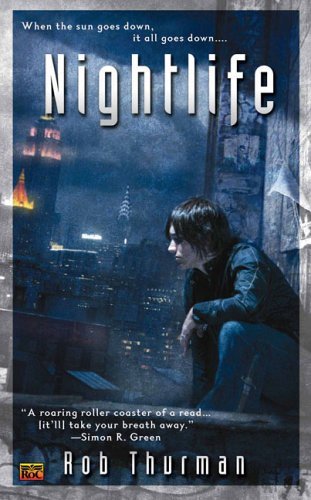
Moonshine, Rob Thurman


The very talented Ms. Thurman is back with her second instalment of the brothers Caliban and Niko. And boy, do they get worked over in this one. All the characters introduced in Nightlife reappear, they get fleshed out, we learn a bit more about everyone, but the main character is still Caliban and he shines in his brilliant sulkiness and dark gloomy gothicness. Yes, that's a word. Because I say so.
The excerpt from the author's site:
After saving the world from his fiendish father's side of the family, Cal Leandros and his stalwart half-brother Niko have settled down with a new apartment and a new gig-bodyguard and detective work. And in New York City, where preternatural beings stalk the streets just like normal folk, business is good.

Their latest case has them going undercover for the Kin-the werewolf Mafia. A low-level Kin boss thinks a rival is setting him up for a fall, and wants proof. The place to start is the back room of Moonshine-a gambling club for non-humans. Cal thinks it's a simple in-and-out job. But Cal is very, very wrong.
Cal and Niko are being set up themselves-and the people behind it have a bite much worse than their bark...
Genuinely a book I would reccommend - completely. I hear the third installment is due next year only. A very very long wait. But it will be worth it.

Twilight, Stephenie Meyer


I bought this book from Waterstones on Wednesday and finished it last night.
It is a hugely annoying book. It's awful. I am deadly jealous.
No one, should be allowed to have this much talent. It's obscene. Sigh.
Okay, so I was lying when I said it's awful. That was me being jealous, greenly jealous. Ms. Meyer has an incredible talent and Bella Swann is a fantastic character, her inner life vividly drawn and the vampire she falls in love with will no doubt beat up the self-absorbed Lestat with one hand tied behind his back - both literally and figuratively. I am not a big fan of vampire stories - thank you for destroying that genre, LKH and AR, but this, this is something vastly different.
The storytelling is vivid, you can picture the town of Forks in your mind, the wet forest, the cold, the slowness of it all, the rare days when the sun does shine...and then the myths of the vampires. It sort of gets turned on its head a bit, but in a totally believable way.
Bella, as the MC, is a believable seventeen year old, with her feet planted firmly in the real world. She has her issues, and her hang ups, and is very innocent but very wise at the same time, having looked after a bit of a ditzy mother all her young life, until she decides to move to Forks and live with her father, Chief Swann of the local police force. Charlie is a cool dad, not very verbose, like Bella, so they get along perfectly fine. And it is an interesting relationship - very little trust issues.
It is a very personal and personable novel. I don't want to tell too much about the storyline because, hey, its more than girl meets boy, boy is a vampire, girl doesn't care, girl is in danger...much more.
I am struggling to get into anything else at the moment. Mainly because the writing style of Ms Meyer was just so beautiful. I think I need quite a break from reading, just to get Bella and Edward exorcised from my mind, a bit. The good news is, the follow-up novel will be out soon in paperback - it's in hardback at the moment. Waits impatiently by the clock.

Sunday, March 18, 2007

Sleeping with the Fishes


I genuinely cannot remember the last time I laughed as much, out loud, to the disturbance of other commuters, as I did reading this book.


The author, the incredibly talented Mary Janice Davidson, has managed to create one of the best female "paranormal" characters I've had the honour to meet.


This is the blurb from Amazon:


Fredericka Bimm - Fred - is a mermaid. But she is not the stuff of legends. A marine biologist, she knows what's in the water so chooses not to expose herself to those toxins. She's allergic to shellfish. The sea creatures she can communicate with won't do her bidding. She doesn't have long blonde hair or a perfect body. And she's definitely not perky! Fred's life is mostly spent trying to conceal her origins - and lately she's been trying to figure out just why there are weird levels of toxins in the local seawater. Then two strangers come into her life. Her new colleague is a sexy - if over-curious - hunk with a mermaid fixation. The other claims he is Artur, the high prince of the black seas - and Fred's rightful ruler!


If, just reading that doesn't crack you up, your heart is stone. Fred is tough, funny, kick-ass and has a very interesting time fending off the advances of the two unexpected men in her life. It is written in a light and engaging way, the dialogue genuinely works very well, is never put upon and is rilly, rilly, cool.


Fred is an engaging main character because she doubts herself, she worries constantly about being found out, about flying under the radar. Importantly she tries to hide herself from everyone, whilst trying to find out exactly what she is, as she is a hybrid. As at home in the sea as she is on land and this is where her identity crisis comes in - she gives Artur a stern telling off, and it resonates with truth. It deals with pollution in a non-preachy way, and with human / Sea Folk relationships in a very direct manner. And please, this is at least an 18 rating book - the language is tough, but funny, the situations real and hilarious.


I will definitely find the other books by the author to read. Thanks Piatkus for sending this along.

Tuesday, March 13, 2007

Excited!


I looked through last week's The Bookseller and fell back in astonishment when I saw a double page advert for Piatkus - they publish, among other things, a bit of paranormal literature - chick lit, vampire fiction and werewolf paranormal slant fiction - and I am thrilled to the bone. So I emailed them and received a copy of a book to review - between trying to make potatoe rostis and feeding the dog, I've read the first few pages and I laughed out loud with such gusto I set the dog off on a barking fit. Result!


It is going to be a good read - Sleeping with the Fishes by MaryJanice Davidson. I will report back but am just so incredibly thrilled to a) receive a freebie and b) to see the type of fiction I so love "urban modern fantasy" being advertised in a solid magazine such as The Bookseller. And for adults too - no YA here, thank you very much.


So, to prove how thrilled I am, up goes the Piatkus website on the linky section.


Ciao!

Barb & JC Hendee

JC and Barb have got a winning streak going - they write exceedingly well in a fantasy genre that can so easily become dull, boring and disillusioning.

They have chosen to portray the vampire myth in a fantasy setting - two things which shouldn't go together, yet they do, very successfully.

I enjoy the characterisation - the interplay, the quests, the fact that there is an overall story and that each book deals with each chapter of the overall story in complete parts - so that, eventhough you are waiting to read the next book, you are satisfied enough with the story you've just completed.

Magiere and her ways is a very strong, moody female character which is the prefect foil for the Elvish rogue Leesil who on the surface appears to be the nice guy...yet he harbours a darker side which the authors seem to relish in describing and hinting at.

But mostly, this is written for a genre of readers who enjoy intelligent writing. They have gone out of their way to create a tangible world, with actual politics, wars, people and dirty grubby peasants. I would recommend the entire range of books from them, naturally start with the first, Dhampir.

Their site is: http://www.nobledead.com/

Tuesday, January 16, 2007

Age of Misrule


Mammoth book. Huge. Vast. Bigger than Dr Strange and Mr. Norrell.
It did worry me and I had to get a separate little book bag from Paperchase to carry it in as it would not fit into my handbag. I could use it to weight lift. And I did. I also accidentally dropped it on a rude man's foot when he decided to try and squish me into my seat by really opening his legs wide to accommodate his bits (like there was anything) - and I think I might have done some serious damage to his foot.
Mwaah aaah.
Right. Onto the actual book review of Age of Misrule by his majesty Mark Chadbourn. When I grow up, I want to write as well as he does. The amount of pure research that went into writing AoM is staggering - oh, I hasten to add that this is actually an omnibus of a series of books and these are as follows:
World's End
Darkest Hour
Always Forever
This from the Amazon website:
All over the country, the ancient gods of Celtic mythology are returning to the land from which they were banished millennia ago. Following in their footsteps are creatures of folklore: the Fabulous Beasts, shape-shifters and Night Walkers, and other, less wholesome beings. As they grow in power, so technology is swept away. It is myth and magic that now rule supreme in this new Dark Age: The Age of Misrule. The Eternal Conflict between the Light and Dark once again blackens the skies and blights the land. On one side stand the Tuatha de Danann, golden-skinned and beautiful; on the other are the Fomorii, monstrous devils hell-bent on destroying all human existence. But in times of trouble, come heroes. Five flawed humans, Brothers and Sisters of Dragons, are drawn together to search for the magical talismans which which to fight the powers of old. But time draws short and humanity looks set to be swept away ...
AoM has really restored my faith in modern reworkings of old myths and legends. How tired are you of the trite stories of Arthur and his band of men? I have come to steer clear of these books entirely as they have just become so incredibly dull - here, you are shown to look past the trite stories worked to satisfy a people keen for diversion. You learn to ignore the "Sunday School" version of many stories, of faeries, the Fay, The Misty Isle, of heroes and you find the grittier versions of them, the dirty mucky ones with real guts and very little glory.
I particularly liked the main character, eventhough there are five (well, six of you include Thomas the Rhymer who acts as the guide to the hapless 5) very diverse and annoying characters who do NOT want to do what needs to be done, the correct way, or the way you would assume it has to be done. Church, the main character, is a tortured soul, a lost soul, someone NO ONE would thought to be the hero of the future. He goes through his life in a shamble, having lost his true love to a senseless murder. He wants to die. He hates life, wonders about the meaning. Then, he sees something truly extraordinary, and meets Ruth who had shared the same experience, and together they start looking for answers and set the bowl rolling for the rest of the adventure. And no matter how you think things will turn out, you're wrong.
Mark just doesn't give you something on the platter. You work with the characters, feeling their joys and failures deeply. Which makes the ending even more poignant. It's not a Hollywood ending, its the ending the book needed.
I bow to the pen of a master - go visit his site, read his book and do enjoy his work as he is genuinely good at what he does.

Saturday, October 21, 2006

Dos and don’ts on approaching a publisher

What I admire about Bloomsbury Publishers is their fantastically helpful writers pages. This is an extract from their site: (this is the link to it )

You want the book you’ve written to be published. So how do you set about it? Where will you send the typescript? Probably to a publisher, but to which one? Michael Legat offers guidelines on how to proceed.

Finding a publisher

Do your market research in public libraries and bookshops, and especially inWriters’ and Artists’ Yearbook, to find out which publishers bring out the kind of book you have written. While looking at the Yearbook entries, note which publishers are willing to consider books submitted to them directly, rather than through an agent, and which require a letter of enquiry first. Incidentally, if you are hoping to interest an agent, they almost all want an enquiry letter first.

Enquiry letters

An enquiry letter should be business-like. Don’t grovel (‘it would be an honour to be published by so distinguished a firm’), don’t make jokes (‘my Mum says it’s smashing, but maybe you’ll think she’s prejudiced’), don’t be aggressive (‘I have chosen you to publish my book, kindly send me your terms by return’). It is a good idea to write to whichever editor in the publishing house is responsible for books of the kind you have written (a phone call will provide this information — but take care to get the right title and spelling of the editor’s name). Enclose a stamped addressed envelope. Look at the examples of the two poor enquiry letters followed by a good one on page 239. You may have noticed that none of the letters refers to sending a disk or email. Such submissions may well become standard in a few years’ time, but that stage has not yet been reached. However, once a book has been accepted, the publisher will certainly want a copy of the book on disk if it is available.

Presentation

Assuming that a publishing firm agrees to look at your book, the editor will expect to see a well-presented typescript (sometimes called a manuscript, abbreviated to MS). Here are some dos and don’ts about its appearance. Use a typewriter or a word processor, or get a secretarial service to translate your handwriting on to a disk. Don’t expect a publisher to read a handwritten script, even if you have a fine Italian hand.Choose a good quality white A4 paper (preferably not continuous listing paper, or if you must use it, at least separate the pages and remove the perforated edges). Whatever paper you use don’t type on both sides, and don’t use single spacing (which publishers abhor, and usually refuse to read) — one side of the paper only and double spacing is the rule. And do leave a good margin, at least 3 cm, all around the text, using the same margins throughout, so as to have the same number of lines on each page (except at the beginning and end of chapters). Double spacing and good margins allow space for your last-minute corrections to the typescript, for any copy-editor’s amendments, and for instructions to the printer. And, not least in importance, a typescript in that style is much easier to read.

Always begin chapters on a new page. Justify on the left hand side only. Don’t use blank lines between paragraphs (in the style of most typed letters nowadays), but indent the first line of each paragraph a few spaces. Blank lines should be used only to indicate a change of subject, or time, or scene, or viewpoint. Be consistent in your choice of variant spellings, capitalisation, use of subheadings, etc. Make up your mind whether you are going to use -ise or -ize suffixes, for example, and whether, if ‘village hall’ appears in your text, you will type ‘village hall’ or Village Hall’.For plays, use capitals for character names and underline stage directions or print them in italics. Use single spacing for dialogue, but leave a blank line between one character’s speech and that of the next character to speak. Poetry should be typed in exactly the way that the poem would appear in a printed version, using single or double spacing and various indentations as the poet wishes.

Organising the pages

Number the pages (or ‘folios’, as publishers like to call them) straight through from beginning to end. Don’t start each chapter at folio 1. If you need to include an extra folio after, say, folio 27, call it folio 27a and write at the foot of folio 27: ‘Folio 27a follows’. Then write at the foot of 27a: ‘Folio 28 follows’. Obviously, if you want to insert more than one page, you would use ‘27a’, ‘27b’, ‘27c’, and so on. Some writers like to use part of the book’s title as well as the folio number: ‘Harry 27’, for example, but this is not essential. Create a title page for the book, showing the title and your name or pseudonym. Add your name and address in the bottom right hand corner, and also type it on the last folio of the typescript, in case the first folio becomes detached. You can also add a word count, if you wish (if using the word-counting facility on your word processor, round the figure up or down to the nearest thousand or five thousand). If you want to include a list of your previously published books, a dedication, a quotation, a list of contents or of illustrations, an assertion of your moral rights, or any similar material, use a separate page for each item. Leave these pages unnumbered or use small roman figures — i, ii, iii, etc — so that the first folio to have an Arabic number will be the first page of your text.When fastening the typescript together, don’t use pins (which scratch), paperclips (which pick up other papers from a busy editor’s desk), or staples (which make it difficult to read). Don’t ever fasten the pages together in one solid lump, and it’s best to avoid ring binders too. Don’t use plastic folders — they are slippery and can very easily cascade off a pile on the editor’s desk (which won’t please the editor). Almost all publishers prefer to handle each folio separately, so put the typescript into a wallet-type folder, or more than one if necessary. Put the title of the book and your name and address on the outside of the folder.

If illustrations form a large part of your book and you expect to provide them yourself they should be included with the typescript, and equally a selection should accompany a synopsis and specimen chapters. Send copies rather than originals. If your book is for children don’t complete all the illustrations until the publisher has decided on the size of the book and the number of illustrations. If you have a friend who wants to supply illustrations for your book, do make sure that they will be up to publishing standard before you accept the offer. You may put off a children’s publisher by suggesting an illustrator — they like to choose.

Waiting for a decision

Many publishers take what seems to be an unconscionable time to give a verdict on typescripts submitted to them. However, a decision whether or not to publish may not be easy, and several readings and consultations with other departments in the publishing house often have to take place before the editor can be sure of the answer. If you have heard nothing after two months, send a polite letter of enquiry; if you get no response, ask for your typescript back, and try another publisher.

Don’t expect to be given reasons for rejection. Publishers do not have time to spend on books and authors which they are not going to publish. However, if the rejection letter contains any compliments on your work, you can take them at face value — publishers tend not to encourage authors unless they mean it.

Copyright material

Copyright exists as soon as you (or anyone else) records anything original to you on paper or film or disk. If you want to quote or otherwise use any material which is someone else’s copyright, even if it is a short extract, you will have to get permission to do so, and possibly pay a fee. This applies not only to the text of a book, but also to letters and photographs, the copyright of which belongs to the letter-writer and photographer respectively. You must always give full acknowledgement to the source of the material. Use copyright material without such clearance and acknowledgement, and you are guilty of plagiarism — and another name for plagiarism is stealing. There are some circumstances in which you may use small amounts of text under a rule called ‘Fair Dealing’. If your book has been accepted for publication, the publisher will be able to give you advice on the matter. (See also articles on copyright starting on page 627.)

Proofs

When your book is accepted by a publisher you may be asked to do further work on it, and a copy-editor will probably check the typescript line by line and word by word. As the author you should see the final copy before it goes to the printer, and this is almost your last chance to make any changes, whether they are simply the correction of literals or are more extensive than that.At a later stage you will be sent proofs from the printer, which you will have to read with great care. Any errors which the printer has made are corrected without charge, but if you alter anything else, the publisher will have to pay for the changes and will be entitled to pass on to you any costs which exceed 10—15% of the cost of composition (i.e. the setting of the book in type). That sounds as though it gives you a lot of leeway, but alterations at proof stage are hugely expensive, so avoid them if you possibly can. Michael Legat became a full-time writer after a long and successful publishing career. He is the author of a number of highly regarded books on publishing and writing.

Friday, October 20, 2006

Mike Carey


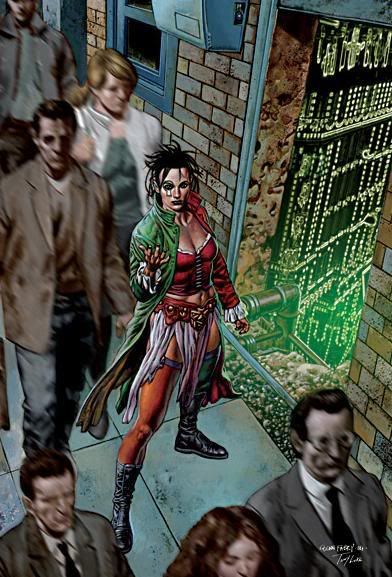
I got to "know" Mike Carey through his book: The Devil You Know. What sold me is that he is the scriptwriter for a lot of Lucifer graphic novels, Constantine and his newest graphic novel, pic above...Neverwhere, written by Neil Gaiman.

I have not read the Neverwhere graphic novel yet, but I did get a copy of his newest book Vicious Circle, having read and absolutely loved and admired The Devil You know. I have dabbled with a few of the Lucifer GN and I love Constantine.

Mike has also been nominated for an award - so I am really pleased for him. Especially as he is a UK writer, not just that, but he writes about London, about the UK and he calls it as he sees it. And he is taking the US urban fantasy writers by the scruff and shaking them around a bit. Simon R Green had better watch out too - there is a new kid on the block, and he is good.

Happy reading!

Thursday, October 05, 2006

Writing news

I spent some time on the net the other day and found a wonderful website - it looks girly (grin) but the advice is genuine and true.

This is the link to it: http://www.fictionfactor.com/articles.html

I hope I won't get into trouble, but this is a sample article from the site:

Synopsis vs. Outlineby Vicki Hinze © 2003

There’s a lot of conflicting information out there on the difference between a Synopsis and an Outline. Many writers, particularly those in the early stages of their careers, find this confusing. So what is the difference?The short answer: A Synopsis is an Overview of the entire story from beginning to end. An Outline is a breakdown of the novel from beginning to end by chapter and scene.Let’s explore both a bit.

THE SYNOPSIS:A decent rule of thumb is 1 page of synopsis for every 10,000 words of manuscript. That's a guide, not set in stone. If you're smart, you'll find out what length synopsis the editor you're targeting prefers. Some like 1-2 pages, others want 25. So they're all over the board on preferences.In the synopsis, you don't get into deep details; again, it's an overview. You do want to focus on character and conflict, and establish the setting and tone of the novel by writing the synopsis in the same style. Now, on character, you must show that characters' goals and motivations. This is how you will, at the end of the synopsis, show that they have changed as a direct result of what they've experienced during the course of the novel. That character growth is what the editor/agent is looking for—to see if it's logical, rational, and believable—as a result of the story events. Those story events should be as a result of the characters' motivations and goals. That establishes their conflicts. Your main characters should have internal and external conflicts. These should be evident in the synopsis by what the character encounters in story events and how the character emotionally/physically/spiritually reacts to those events. Again, this is an overview of the novel. It always—even if you’ve done chapters to send along with it—starts at the beginning and progresses through to the end of the story holding all the key pivotal points in the novel.

THE OUTLINE:This is not an overview document, but an explicit one that breaks the book down chapter-by-chapter and scene-by-scene. Consequently, it is usually much longer than the synopsis. Here, you establish the events and rational (goals, motivations, and conflicts) of each scene and the scene resolution. (Note: There’s an article on the Elements of a Scene that could be helpful in the Writers’ Aids Library.)Scene resolution is NOT conflict resolution. Let's say the goal of the scene is to find out if a person has information on the major conflict of the story. In that scene, the characters interact and the scene concludes. The resolution of that scene is either the character wanting the major conflict information got it, didn't get it, or still doesn't know if the other character has the information. The scene, not the conflict, resolved.So in an outline, you work through the scenes, again including from the beginning of the book all the way through to the end, providing more detailed information on each scenes' content. (Which of course, includes goals, motivation, conflicts--internal and external.)Now do agents or editors use the terms interchangeably? Seldom. Do Agents or editors ever ask for both a synopsis and an outline? On occasion, yes. And when they do, they are after both the overview synopsis and the detailed outline.

© Copyright Vicki Hinze 2003. All Rights Reserved
~~~~~~~~~~~~~~~~~~~~~~~~~~~~~~~~~~~~~~~~~~~~~~~~~

Dr. Vicki Hinze is an award-winning, best-selling author who routinely shares her expertise at national writers' conferences, online, and through her writing guides. Her latest non-fiction book is ALL ABOUT WRITING TO SELL, from Spilled Candy Books for Writers. This 589-page ebook covers everything you need to know about the craft of writing, the publishing business, and the secrets to getting published. ALL ABOUT WRITING TO SELL is available at www.SpilledCandy.com as a download or disk.

Or you can visit Vicki's author site at www.vickihinze.com

Wednesday, August 30, 2006

To plagiarise or not to plagiarise, that is the question!

This weekend past I had been given a copy of a book called: How Opal Mehta Got Kissed, Got Wild and Got a Life by Kaavya Viswanathan.

At the back of my mind I kept on thinking - "self, we know about this book...we've heard about it..." - so tonight, my first night online since the weekend, I googled it and lo! I was correct.

Kaavya Viswanathan is the young woman who duped publishers into publishing a heavily plagiarised book from various authors. Fans of Megan McCafferty who had written Sloppy Firsts and Second Helpings noted the similarities to Kaavya's books and immediately raised the alarm by contacting Ms McCafferty directly via email.

Kaavya who had secured a large advance on the book sales at first denied copying anything from Megan's work. Then a revised statement came out citing that Megan's work had been such an inspiration to her during her school going career that she had somehow retained some of the story, structure etc. and stuck it into her own work.

I googled some more and found some utterly astounding similarities, not just with Megan's work but other authors too. Check it out on the Wikipedia site!

I am stunned and amazed that someone could manage to get away with something like this. Even for a minute!

I feel sorry for Kaavya who has gone into retreat since the scandal hit at the beginning of the year. It must be hard to return all that money - not even sure if it got to be returned!?, I would think so, but what do I know!? - and admit to the world that your labour of love was more restructuring paragraphs of already published authors to make it seem like your own. Not just that but the movie deal fell through as did the follow-up novel which the publishers had signed a contract for. Can you say ouch!?

She must have felt awful when Megan's fans started picking up on all the similarities - trust me, they are hugely the same - she no doubt thought that NO ONE would ever sit up and take notice...never mind study the books and point out more than just one or two sections.

Shocked.

Did she think people were stupid? Its not like we live in the back of beyond where ideas do not get swapped daily via the internet, telephone, fax and word of mouth. And even in the back of beyond, you have to be pretty skilful to pull of a trick like plagiarising someone else's work...maybe a long dead author of a hundred or two hundred years ago, when admittedly it can be a "rewritten" piece of work...but ripping off well known authors with a huge fan base is just utterly stupid.... and she managed to get into Harvard?????

I sit here and think to myself that clearly I am doing the wrong thing by actually battling to get my own story out...maybe I can crip something like, I don't know...the previous Harry Potter movie...surely NO ONE has read about a wizard, his mates, his enemies. Yes, fabulous idea.

I'll do that.

Saturday, August 26, 2006

The Undomestic Goddess, Sophie Kinsella

I picked this up from a colleague at work on Friday afternoon, started reading it on the train on the way home, later the day and finished it this morning after homework was completed.

It is an exceedingly funny book, the character, Sam, is real enough and you can sympathise with her, her situation, but you can see the ending a mile off.

High flying young lawyer, about to be made youngest partner in a large law firm in London...she gets the hibbie jibbies when she discovers a piece of paper on her desk which she had to do something crucial with...this leads to all sorts of complications, ending with her walking out on her job, her life, getting on the train and ending up in the back of beyond where she somehow manages to get hired as a chef and housekeeper for two very sweet people who are a bit tacky, having come into a lot of money through business dealings. Comedic confusion ensues as Sam has no idea how to cook, clean or iron or even Hoover...so she is stuck and some of the situations are hilarious, laugh out loud funny. She however meets the gardener, Nathanial who is devastatingly handsome and she gets naughty thoughts about him...well, need I say more?

I can very easily see this be turned into a rom-com movie starring someone like Kate Hudson, Clive Owen and Matthew Mcwhatisface, he of the bongo drums fame.

A fantastic book to sit back with, to forget the mundane and be swept away with other people's lives. Enjoyable and easily read. If only all of us could walk out of our day jobs, into the countryside and not only not have to worry about money or any bills, but to find our dream jobs...sighs and goes off to check her lottery ticket.

Monday, July 03, 2006

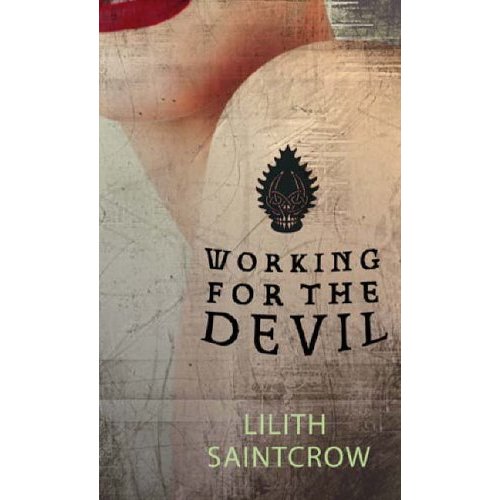
Working for the Devil - Lilith Saintcrow


Dante Valentine's working relationship with the Devil began on a rainy Monday. Dante's a licensed Necromance, one of the best ever to survive training, and she's got an emerald embedded in her forehead to prove it. That's why the Devil sends his minion to hire Dante to kill Vardimal Santino, a fugitive demon. As Dante points out, Necromances don't kill people, they bring them back; or at least their ghosts. But turning down Lucifer isn't something you do if you want to stay alive, and besides, it turns out she's got a score to settle with Santino. Desperate to track down an enemy she can't find, Dante is bonded with a demon familiar she doesn't trust and a small band of psychics who seem almost as determined to help her as she is to refuse their help. The thing is, Dante doesn't need friends, she needs a miracle. Because the first time Dante Valentine met Santino, she almost died.

I found a copy of the book at Forbidden Planet, read the back once...then again. And bought it. How could I not!?

And let me say, I am not disappointed. And I am even happier to learn that there are more books on the way from Ms. Saintcrow.

She has created a funny warm hearted heroine who seems very tough, very capable and hilariously funny. Dante has a good background, loads of things hinted at which could be used in the next few books. She is convincing as a person, even if she is a Necromance, and not a section of "magic" which usually gets written about - and I am not talking Garth Nix and Abhorsen here either.

The story is set in the future. A lot has happened - magic is real, as is angels, demons, the Fallen, vampires, necromances, psions and other paranormal types. It works - you do not get overloaded with needless information, very few pieces of information get repeated (for example, you learn that Dante can handle herself in a tough situation, unlike the Merry Gentry books by LKH, where you constantly have to hear how small she is, how tiny her hands are, how pretty she is or how macho her men are) - Dante is Dante - she is capable and eventhough she has been thrown in the deep end with a familiar, from Lucifer himself, she draws herself up and does what she has been told/asked/cajoled into doing.

I would really recommend the book. If you are after a "fresh" voice, a strong female lead character and a hugely amusing cast of supporting characters, do give it a whirl. You will not be disappointed!

Wednesday, May 31, 2006

Tim Severin - Viking, Odinn's Child

Isn't it nice discovering an unread book on your bookshelf...one you thought you had read but once you've picked it up to leaf through it...you notice that you have not in fact had the pleasure. And you go and make yourself some coffee, haul out the rich tea biccies and formally introduce yourself to this new adventure.

And adventure it is!

Viking: Odinn's Child is the first book in a trilogy (the other two are already out, in fact, I already have book two waiting for me) and it follows the adventures of Thorgils Leiffson.

Our story begins in the year 1001 and the toddler, Thorgils Leiffson, son of Leif the Lucky and Thorgunna, arrives on the shores of Brattahlid in Greenland to be brought up in the fostercare of a young woman - Gudrid. Thorgils is a rootless character of quicksilver intelligence and adaptability. He has inherited his mother's ability of second sight and his destiny lies beyond the imagination of those around him. Virtually orphaned, he is raised by various mentors, who teach him the ancient ways and warn him of the invasion of the 'White Christ' into the land of the 'Old Gods'. Thorgils is guided by a restless quest for adventure and the wanderlust of his favoured god, Odinn. His fortunes take him into many dangerous situations as well as to the brink of death by execution, in battle, disease and shipwreck...Packed with wonderfully reimagined Viking sagas and adventures, and fascinating and unique characters, Viking - Odinn's Child gives historical novel writing a new dimension. - This from FantasticFicton.com

What I thoroughly enjoyed and am still enjoying as I have not finished the book - yet - is how beautifully it is written. The author, Tim Severin clearly loves his subject matter - being a bit of a historian, traveller and adventurer himself - and whilst it is packed full of interesting information that fills your head with the sounds, smells and t he stark reality of living in an age as violent and as exciting as this, he manages to make it not become tiresome. He is the master of showing and telling, all at once, but with such great skill that you only realise after the fact that you have just learned how they spent Christmas - Jol - in the Orkneys and what kind of ruler their king was, etc. Cunningly done and with great pace.

I can't wait to read it all - in fact, I have been to visit Tim Severin's website and I am delighted to learn that he is a true gentleman adventurer. He has several other books out, non-fiction, in which he travels the world, examining the stories and facts behind classical stories such as Jason and the Golden Fleece, Ulysses, Sinbad, etc. And that he has produced films and documentaries for the Beeb and National Geographic. Very impressive!

Happy reading!

Sunday, May 07, 2006

Anansi Boys - Neil Gaiman


Och. The sheer jealousy this man's writing evokes in me!

Hubby bought the book for me as a present and it was such a treat to sit down and read it. One of those books - yet again - that made the train journeys just go so much faster!

Once again, Mr. Gaiman, decides to populate the world with gods, their offspring and all their hilarious and over the top wonderful adventures.

The backpage blurb:

God is dead. Meet the kids.

When Fat Charlie's dad named something, it stuck. Like calling Fat Charlie "Fat Charlie." Even now, twenty years later, Charlie Nancy can't shake that name, one of the many embarrassing "gifts" his father bestowed -- before he dropped dead on a karaoke stage and ruined Fat Charlie's life.

Mr. Nancy left Fat Charlie things. Things like the tall, good-looking stranger who appears on Charlie's doorstep, who appears to be the brother he never knew. A brother as different from Charlie as night is from day, a brother who's going to show Charlie how to lighten up and have a little fun ... just like Dear Old Dad. And all of a sudden, life starts getting very interesting for Fat Charlie.

Because, you see, Charlie's dad wasn't just any dad. He was Anansi, a trickster god, the spider-god. Anansi is the spirit of rebellion, able to overturn the social order, create wealth out of thin air, and baffle the devil. Some said he could cheat even Death himself.

Returning to the territory he so brilliantly explored in his masterful New York Times bestseller, American Gods, the incomparable Neil Gaiman offers up a work of dazzling ingenuity, a kaleidoscopic journey deep into myth that is at once startling, terrifying, exhilarating, and fiercely funny -- a true wonder of a novel that confirms Stephen King's glowing assessment of the author as "a treasure-house of story, and we are lucky to have him."

I remember reading Neverwhere just before moving to the UK and somehow this slightly askance universe really made sense to me of what London represented. I became a big fan of Mr. Gaiman after this although, ashamedly, I will say that I have not read any of the Sandman graphic novels.

Anansi Boys is brilliantly written. His style of writing is so tongue in cheek and keenly observed that it can be written about any of our families'. Siblings you don't really want to have, but they stick nonetheless, embarrassing moments your parents pushed you into and you believed them because they would't lie to you, would they?

The main character, Fat Charlie had all my sympathy in this book - his life was invaded by a brother he didn't know he had called Spider, who, for all intents and purposes had inherited their dad's powers. Spider pretends to be him, blackmails his boss, charms his fiance and this is just the start of it all!

Such a well written funny book - and yes, I am being repetative here as I don't know what else to say other than "go and buy it, borrow it, but read it!".

Wednesday, April 12, 2006

Nightlife, Rob Thurman


A few weeks ago I was lucky enough to have lunch with wordweaver and we chatted away for ages over remnants of pizza and juice at a Pizza Express just off Museum Street in London. I had the afternoon off - I know, I am the luckiest girl! - and after we hugged one another goodbye I set off to visit Forbidden Planet on Shaftesbury Avenue to have a "look around" - my intention was to keep my cards firmly in my pocket and not to succumb to temptation.

**giggles**

Well, I failed. I came away with two books for hubby, and an armload for me. One of which was Nightlife by Rob Thurman. I was a bit tentative, thinking it was going to be a bit rubbish, but for a fiver, I could risk it.

And, once again, I was proven wrong. What a good read by the first time novelist Rob Thurman - www.robthurman.net - and a definite talent to watch out for.

The novel surrounds Cal - Caliban - and his brother Niko. They are on the run. From monsters, grendels, who are after Cal. You see, he is an interesting mixed breed of monster and human, the first ever hybrid to live and survive after a breeding...and they want him back...what for isn't clear at first. They had him, when he was younger, they snatched him away but he managed to escape and he came back to find his brother Niko waiting for him at that exact spot he disappeared. Niko turns out to be a blond Jet Li, scarier than Van Damme and meaner than Chuck Norris on a bad hair day. Together with Robin Goodfellow they face the grendels, they meet up with a loup garou, they shake down a bogart and fight a troll. A lot, a lot! happens in this book.

I suppose, it could almost be aimed at the young adult market but then...adults wouldn't read it and eventhough it is written from Cal's perspective, it isn't a childish book. It deals quite maturely with parents gone wrong - the mother is a drunk and drug addict - how family genuinely matters in times of need and how far you are prepared to go to protect those you love.

I genuinely hope Mr Thurman writes another one as he has created a paranormal culture world in New York City and he could easily set off another novel there.

I give the book....four book stars!

Jo Beverley - Meeting and greeting and signing


About a year or so ago, I came across this little gem in the Waterstones on Piccadilly and thought that I would give it a read. It sounded enchanting and in the same vein as the Georgette Heyer books from my teenage years.

I read it and loved it and wrote to the author, Jo Beverley, to tell her how much I enjoyed reading a historical romance and how - once again - it has opened my eyes to the possibilities within this genre. What helps is that Jo can write. Her characters are funny, bold, brash, silly, sweet, brave, handsome, pretty, sexy...the works.

This is a brief idea of the book:

To save her sister, Lady Chastity Ware hold up a coach. Unfortunately, instead of containing an elderly lord or a wealthy merchant, it holds Captain Lord Cynric Malloren, bored after time at home recovering from sickness. To her exasperation, he insists in helping her, regarding the whole thing as an adventure.
While evading the villain who seeks to snatch her sister's child, and the military raised to search for all of them, Chastity and Cyn fall deep in love. But Chastity is a ruined woman whose father will never let her marry a Malloren, and Cyn's brother, the formidable Marquess of Rothgar, will surely not permit such a disastrous alliance.


What was genuinely nice is that Jo emailed back and we have had an on-off email correspondence going for a few months now. On Monday I got an email from her pointing out that she will be doing a signing of her new novel at Murder One on Charing Cross Road in London, if I wanted to attend.

Having not ever been into Murder One, I thought yeah, that is an idea so off I toodled and found her firmly enthroned - complete with a pen that lights up when she writes - in the "romance" section of the bookshop. It was a revelation. There were four of us, excluding the shop assistant who looked after that section of the shop, and then of course, Jo who had us in gales of laughter at her research, her characters, etc. What a fantastically funny and witty lady who is, apparently huge in America and Canada, whereas I don't think she is that well known in the UK. With in excess of 29 books to her name she is not only prolific - did I mention I was jealous? - but also an extremely well read and genuinely interesting person. She was holding court, when I left, having had my copy of Lady Notorious signed - neh, neh, neh - and with promises extracted from the shop assistant that I would be back to visit.

I must admit, as previously when I did the review of the Alexander Potter book, that I am ashamed of my own preconceptions on this genre in general. Having grown up with the soul-sucking Mills & Boon novels from the 70's and 80's I thought I had been put off Romance for life. Today's visit, and reading these two gems, has definitely changed my mind. In fact, I would go as far as say that there had been a bit of an "about face".

The genre has expanded tremendously - these days it isn't just bustier rippers, historical romance and pink fluffy modern girly books that line the shelves - they have expanded into a huge range; thanks to Laurell K Hamilton and her ilk, they now have books that cross over into urban fantasy (vampires and werewolves) into thriller (spy novels for girls) into supernatural/paranormal....it is fantastic!

A new reading genre has opened to me - here's hoping the hubby can cope with the more books that will be bought!

Watch this space....

Tuesday, March 14, 2006

So many books, so little time

I love reading. It is my life. It is like breathing. I always have reading matter with me, be it my journal, a novel, a writing course book, newspaper or article from the net.

I can wax lyrical about a chapter, a sentence used to describe something that really resonates but I have found that sometimes, when I do, and I try and explain it, I get these "dead fish" eyes looking at back at me from the people I am talking to. And I realise that not everyone can get carried away by a book, be it a romance, a chick-lit book, a sweeping historical novel spanning generations, a science fiction book of the improbable future or a fantasy book with swords, sandals and beautiful damsels and handsome heroes.

I remember the easiest way to get my mom to sleep on a Sunday afternoon was to hand her a newspaper whilst sitting on the couch. She would be - guaranteed - gone in a matter of five minutes or less. She hated me reading. Always thought it was a waste of precious time. I could be out there, doing other things. Like cooking and cleaning and helping her with her many crafts. I suppose, I might have been better off learning these things as I am not a good house keeper at all; I am a very good cook, but that might be genes and the necessity to eat playing a big role there...and I have brilliant ideas for making things...just not the ability to.

But what I do have is an enduring passion for the written word. My prized possession at the age of fifteen was a leather bound copy of Shakespeare's works. I remember sitting in the back of our Toyota Cressida driving down to the coast for our annual holiday, hugging the book to me, touching it and opening it at random and reading the Bard's words to myself and thinking that no one could write better than that. Where other kids that age would run a mile reading his plays, I lapped it up. I was a geek, I admit it, but I was a geek with an imagination and a fantastic vocabulary.

I forget the real point behind this blog...but the pic and the title says it all: So many books, so little time! Or, as a friend who recently got Sky said: so many channels to watch, not enough eyes. I rest my case.